
Description:
Orthopedic surgery is a branch of surgery concerned with the diagnosis, treatment, and rehabilitation of disorders affecting the musculoskeletal system, including bones, joints, ligaments, tendons, muscles, and nerves. Total Knee Replacement (TKR) – also known as Total Knee Arthroplasty – is one of the most commonly performed orthopedic procedures worldwide. It involves resurfacing the damaged weight‑bearing surfaces of the knee joint (femur and tibia) with artificial prosthetic components, and in some cases, resurfacing the patella (kneecap) as well. Indications for total knee replacement include severe osteoarthritis (degenerative joint disease), rheumatoid arthritis, post‑traumatic arthritis, avascular necrosis of the knee, and advanced joint damage resulting in chronic pain, significant functional limitation, and disability that has not responded to conservative treatments (medications, physical therapy, corticosteroid injections, or viscosupplementation). Patients typically present with progressive knee pain aggravated by weight‑bearing and activity, morning stiffness, reduced range of motion, joint swelling, crepitus (grinding sensation), and difficulty performing daily activities such as walking, climbing stairs, or getting up from a chair.
Treatment Options:
The main treatment modalities for knee joint disorders include:
Conservative / Non‑surgical Treatment – physical therapy, pain management (NSAIDs, acetaminophen), weight reduction, activity modification, assistive devices (canes, walkers), intra‑articular corticosteroid injections, and viscosupplementation (hyaluronic acid injections)
Arthroscopic Debridement / Lavage – minimally invasive procedure for removal of loose bodies or damaged cartilage (indicated in selected cases with mechanical symptoms)
Osteotomy – realignment of the bones around the knee joint to offload the damaged compartment (indicated in younger patients with unicompartmental disease and malalignment)
Unicompartmental Knee Replacement (Partial Knee Replacement) – replacement of only the damaged compartment of the knee (medial, lateral, or patellofemoral) – indicated for localized disease with intact cruciate ligaments
Total Knee Replacement (TKR / Total Knee Arthroplasty) – replacement of all three compartments of the knee (medial, lateral, and patellofemoral) – indicated for advanced, multi‑compartmental osteoarthritis
Revision Knee Replacement – replacement of a failed or loosened previous prosthetic implant
Procedures:
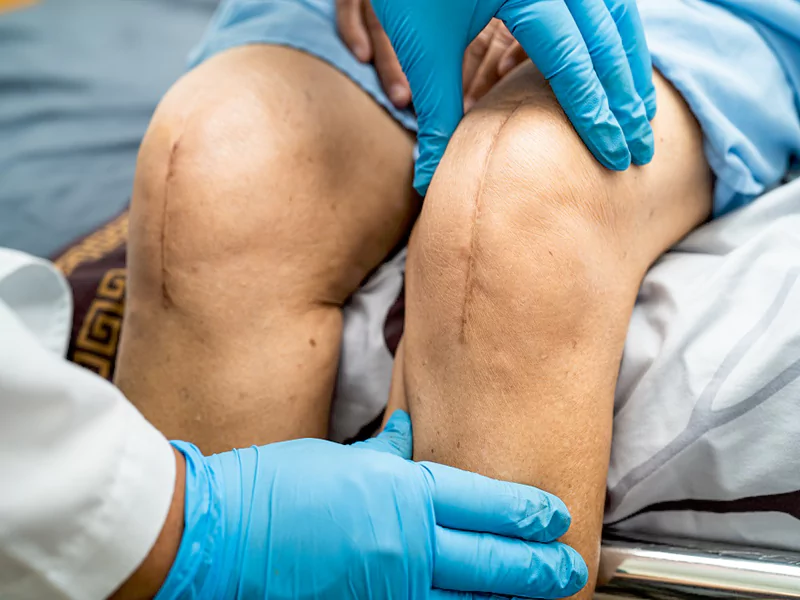
Total Knee Replacement is performed under general anesthesia or spinal/epidural anesthesia and typically takes 60 to 120 minutes, depending on the complexity of the case, degree of deformity, presence of prior surgeries, and need for bone grafting or augmentation. The procedure is performed through a longitudinal midline incision over the anterior aspect of the knee, approximately 15‑20 cm in length. The damaged articular surfaces of the distal femur and proximal tibia are resected using specialized cutting guides. The patella may also be resurfaced. The prosthetic components (femoral, tibial, and patellar) are then implanted, usually with bone cement (cemented technique) or without (press‑fit / cementless technique). After implantation, the stability, alignment, and range of motion are assessed. A drain is placed to prevent hematoma formation, and the wound is closed in layers. Postoperative rehabilitation begins on the same day or the following day.
This package includes:
- Preoperative consultation with orthopedic surgeon, anesthesiologist, and physiatrist
- Complete laboratory workup (CBC, coagulation profile, liver/kidney function, ESR, CRP, fasting blood sugar, electrolytes)
- Weight‑bearing X‑rays of both knees (standing anteroposterior, lateral, and patellofemoral views)
- Long leg alignment X‑ray (to assess mechanical axis)
- MRI of the knee (if indicated for assessment of ligament integrity or avascular necrosis)
- ECG and chest X‑ray (for anesthetic clearance)
- Preoperative medical optimization by internal medicine specialist (if indicated)
- Total Knee Replacement (TKR) under general or spinal anesthesia
- Standard prosthetic implants (femoral, tibial, patellar components) – cemented or cementless
- Intraoperative use of tourniquet and advanced hemostatic techniques
- Three to five days hospital admission (standard postoperative stay)
- Postoperative pain management (patient‑controlled analgesia, nerve blocks, multimodal analgesia)
- Wound care, drain management, and DVT prophylaxis (anticoagulant therapy, compression stockings, early mobilization)
- Inpatient physical therapy and rehabilitation (starting from day 1 post‑op)
- Discharge medications (antibiotics, anticoagulants, analgesics) and comprehensive follow‑up plan
- Post‑discharge home exercise program and rehabilitation guidance
- One follow‑up appointment within 2‑4 weeks post‑discharge for wound check and X‑ray
- Preoperative medical clearance beyond standard evaluation (e.g., cardiology consult, stress testing, echocardiography) – if required, costs are separate
- Extended hospital stay beyond five days due to complications (e.g., infection, wound dehiscence, deep vein thrombosis, pulmonary embolism, periprosthetic fracture, implant loosening)
- High‑flexion or custom‑made implants (if requested – additional cost)
- Robotic‑assisted or computer‑navigated surgery (if requested – additional cost)
- Blood transfusion (if required – costs are separate)
- Extended physiotherapy or rehabilitation sessions beyond the inpatient stay (outpatient physiotherapy is separate)
- Revision surgery (if required in the future)
- Consultation with other specialists (e.g., cardiologist, pulmonologist) if needed postoperatively
- Prosthetic components beyond standard (e.g., hinged implants, tumor prostheses)
- Home nursing care or home physiotherapy services after discharge
Instructions (Preparation):
Do not eat or drink anything (except essential medications with a small sip of water) for at least 6–8 hours prior to surgery (general or spinal anesthesia protocol).
Bring all your previous medical records, X‑rays, MRI reports, and any prior treatment history (including previous knee surgeries).
Inform your surgeon and anesthesiologist about any history of bleeding disorders, allergies, current medications (especially anticoagulants, antiplatelets, NSAIDs, or steroids), and any underlying medical conditions (diabetes, hypertension, cardiac, pulmonary, or renal disease).
If you are on anticoagulant or antiplatelet therapy (e.g., aspirin, warfarin, clopidogrel), discuss with your surgeon when to stop these medications (typically 5‑7 days prior to surgery).
If you have diabetes, ensure your blood sugar is well‑controlled before surgery.
If you are a smoker, stop smoking at least 2‑4 weeks before surgery to improve wound healing and reduce anesthetic and cardiovascular risks.
Preoperative exercises (quadriceps strengthening) are recommended to improve postoperative recovery.
Arrange for a family member or caregiver to assist you during the first 2‑4 weeks after discharge.
Prepare your home for safety (remove tripping hazards, install handrails, arrange for a raised toilet seat, etc.).
Terms and Conditions:
All total knee replacement surgeries are performed using the latest surgical techniques and state‑of‑the‑art implants. Intraoperative navigation and computer‑assisted technology are available upon request. Strict infection control protocols, antibiotic prophylaxis, and DVT prophylaxis are implemented to minimize complications. The surgical team consists of highly experienced orthopedic surgeons specializing in joint replacement, supported by dedicated physiotherapists and rehabilitation specialists.
Patient Eligibility:
All procedures are conducted with the most advanced equipment and implants.
Appropriate candidates for total knee replacement include:
Patients with advanced osteoarthritis (Kellgren‑Lawrence grade 3‑4)
Patients with significant pain and functional limitation refractory to conservative treatment for at least 6 months
Patients with severe joint space narrowing, osteophyte formation, and deformity (varus or valgus malalignment)
Patients with rheumatoid arthritis or post‑traumatic arthritis causing debilitating symptoms
Contraindications (High‑Risk Patients):
Patients with the following conditions are considered high‑risk and require thorough preoperative multidisciplinary assessment:
Active or recent joint infection (septic arthritis)
Significant neuromuscular disease affecting the quadriceps mechanism (e.g., severe peripheral neuropathy, poliomyelitis)
Severe peripheral vascular disease or unreconstructable arterial insufficiency
Uncontrolled medical conditions (uncontrolled diabetes, severe cardiac or pulmonary disease, advanced renal failure)
Morbid obesity (BMI ≥ 40) – associated with higher complication rates
Age over 80 years with multiple comorbidities – requires careful risk‑benefit assessment
Significant bone loss or bone stock insufficiency (may require revision or custom implants)
History of previous infection or osteomyelitis in the affected knee
Severe osteoporosis (risk of periprosthetic fracture)
Contact:
Jam Hospital is available 24/7 for consultations, admissions, and emergency support. Our dedicated joint replacement team is ready to answer your questions and guide you through the entire treatment journey.
Goals:
To provide the most effective, safe, and individualized surgical treatment to relieve pain, restore joint function, improve mobility and quality of life, and ensure rapid recovery through a comprehensive multidisciplinary approach (surgery, pain management, and structured rehabilitation) for optimal long‑term outcomes and patient satisfaction.