
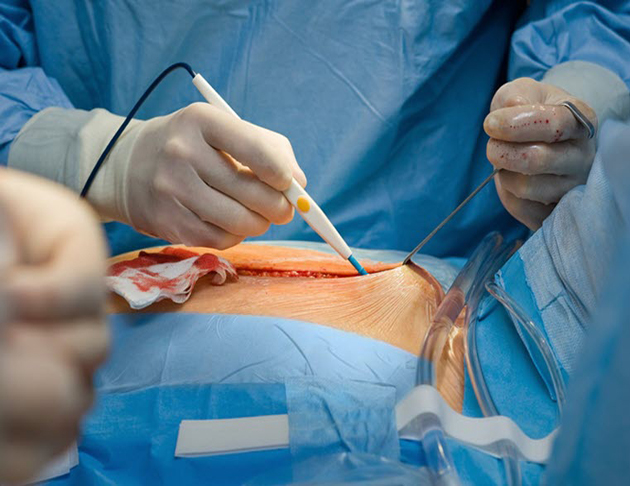
Description:
Pipec is a novel, minimally invasive procedure in which chemotherapeutic drugs are administered as a pressurized aerosol (fine mist) into the peritoneal cavity. This method is specifically designed for patients with peritoneal carcinomatosis (dissemination of cancer cells on the peritoneal surface). Pipec is particularly indicated for patients who are not candidates for HIPEC surgery (cytoreductive surgery with heated intraperitoneal chemotherapy) for various reasons, or those who are being prepared for future HIPEC surgery. Additionally, in patients with no other effective treatment options who suffer from severe malignant ascites (fluid accumulation in the abdomen), this procedure can be used to improve quality of life.
The mechanism of action involves pressurized aerosol administration, which significantly increases the penetration depth of chemotherapeutic agents into tumor tissues. This allows the drugs to reach deeper layers of cancerous tissues, leading to tumor shrinkage, reduced activity, or even complete regression over time. Consequently, the patient becomes better prepared for subsequent surgeries (such as HIPEC).
Contraindications for Pipec (Patient Ineligibility):
Not all patients are candidates for Pipec. Contraindications include:
Inability to tolerate general anesthesia – patients with poor performance status who cannot undergo general anesthesia.
Partial or complete bowel obstruction – in patients with more than 50% bowel involvement and partial obstruction, Pipec can cause edema and swelling of the intestinal wall, potentially converting partial obstruction into complete obstruction. Therefore, these patients are not suitable for Pipec.
Procedures:
Pipec is performed laparoscopically without the need for open abdominal surgery. The steps are as follows:
The patient is placed under general anesthesia.
Two ports (cannulas) of 11 mm and 5 mm are inserted into the abdominal cavity.
Simultaneous biopsy is performed from various areas of the abdominal cavity and peritoneal wall. Biopsies are taken from four quadrants: upper and lower abdomen on the right and left sides (for accurate assessment of disease extent).
The PCI (Peritoneal Carcinomatosis Index) is calculated to determine the extent of cancerous involvement in the peritoneal cavity.
After biopsy and PCI assessment, the chemotherapeutic agent is administered as a pressurized aerosol into the peritoneal cavity.
The procedure typically takes 60 to 90 minutes.
Patients usually require one to two days of hospital admission.
Required Equipment and Facilities:
Pipec requires a dedicated, well‑equipped operating room:
Special ventilation system – the operating room must have a specialized air circulation system to ensure that aerosolized chemotherapy particles are efficiently evacuated, preventing contamination of staff and the surgical team.
Personal protective equipment (PPE) – personnel must wear specialized masks and protective clothing to avoid inhalation of drug particles and potential pulmonary effects.
Pressurized aerosol generation device – this procedure requires a specific device and technology capable of generating and delivering the drug as fine pressurized particles.
This package includes:
- Preoperative consultation with surgical oncologist, medical oncologist, and anesthesiologist
- Comprehensive general health assessment and evaluation of Pipec indications
- Complete laboratory workup (CBC, coagulation profile, liver/kidney function tests)
- Abdominal and pelvic ultrasound (for ascites and peritoneal involvement assessment)
- Contrast‑enhanced CT scan (for determining disease extent and PCI)
- Diagnostic laparoscopy with simultaneous biopsy from four abdominal quadrants (upper/lower, right/left)
- Calculation of Peritoneal Carcinomatosis Index (PCI)
- Pressurized IntraPeritoneal Aerosol Chemotherapy (Pipec) using specialized equipment
- One to two days hospital admission
- Postoperative pain management and care
- Discharge medications and follow‑up plan
- Complete histopathology report (from biopsies obtained)
This package excludes:
HIPEC surgery (if subsequent surgery is required, costs are separate)
Systemic chemotherapy (outside of Pipec sessions)
Radiotherapy or other adjuvant therapies
Extended hospital stay beyond two days due to complications (e.g., bowel obstruction, infection, bleeding)
Consultation with other specialists (if additional treatments are required)
Cost of specialized equipment and device (if not covered by the treatment center)
Instructions (Preparation):
Do not eat or drink anything (except essential medications with a small sip of water) for at least 6–8 hours prior to surgery (general anesthesia protocol).
Bring all your previous medical records, imaging reports (CT scans, ultrasound), histopathology results, and prior treatment history.
Inform your surgeon about any history of bleeding disorders, allergies, current medications (especially anticoagulants and antiplatelets), and any previous abdominal surgeries.
If you have ascites, therapeutic paracentesis (fluid drainage) may be performed before the procedure.
A specific dietary regimen may be prescribed by the treatment team (especially in patients with bowel involvement).
Terms and Conditions:
All Pipec procedures are performed using the latest pressurized aerosol generation devices and most advanced laparoscopic equipment to ensure maximum safety for both the patient and personnel. The operating room is equipped with a state‑of‑the‑art ventilation system to prevent environmental contamination and any adverse pulmonary effects on the surgical team. The procedure is carried out by an experienced, specially trained surgical team.
Patient Eligibility:
All procedures are conducted with the most advanced equipment.
Appropriate candidates for Pipec include:
Patients with confirmed peritoneal carcinomatosis
Patients who are not candidates for HIPEC surgery (due to disease extent or poor performance status)
Patients being prepared for future HIPEC surgery (as neoadjuvant therapy)
Patients with refractory malignant ascites requiring quality‑of‑life improvement
Contraindications (High‑Risk Patients):
Patients with the following conditions are not eligible for Pipec:
Inability to tolerate general anesthesia (very poor physical status)
Partial or complete bowel obstruction (>50% bowel involvement) – because Pipec induces edema and swelling of the bowel wall, which may convert partial obstruction to complete obstruction
Severe coagulation disorders or bleeding diathesis
Active abdominal infections
Pregnancy
Contact:
Jam Hospital is available 24/7 for consultations, admissions, and emergency support. The specialized peritoneal carcinomatosis treatment team is ready to answer your questions.
Goals:
To provide the most effective and minimally invasive targeted intraperitoneal chemotherapy to reduce tumor burden, prepare patients for subsequent surgeries (HIPEC), improve quality of life in patients with refractory ascites, and enhance long‑term survival in patients with peritoneal carcinomatosis.